
Blog
0800 587 0463: Who Called Me and Is It Really PayPal?


Receiving an unexpected call from 0800 587 0463 can naturally make us wonder who is behind the number and whether the call is genuine. Online caller-reporting services currently associate 0800 587 0463 with PayPal, particularly calls concerning PayPal accounts with negative balances or payment-related issues. However, reports are not completely consistent, and caller ID can be spoofed, so the number alone should never be treated as conclusive proof of identity.
The number uses the 0800 UK Freephone format, which is commonly used by legitimate businesses and customer-service operations. At the same time, freephone numbers can be impersonated by scammers, making independent verification especially important when an unexpected call asks for personal, financial, or security information.
Who Is Calling From 0800 587 0463?
The strongest current identification found in public caller-reporting databases is PayPal. One number-reporting service specifically identifies 0800 587 0463 as PayPal and records a large number of searches and user comments. Its reports include people describing calls connected with negative PayPal balances, payments, and account-related matters.
Another public lookup service also lists the number under PayPal, although it simultaneously advises caution because legitimate freephone numbers can be used in impersonation attempts.
This means the most reasonable conclusion is that 0800 587 0463 has been associated with PayPal by multiple caller-identification services, but that association should not be considered absolute proof that every call displayed from this number actually originates from PayPal.
Some other telephone databases provide less conclusive information. For example, one UK number directory identifies it simply as a UK toll-free number, while another gives it a neutral rating and says there are limited direct reports.
Why Might PayPal Call From 0800 587 0463?
According to multiple user reports collected by caller-identification services, calls associated with this number have frequently been connected with PayPal account balances and payment issues. Some users specifically report that PayPal contacted them after their accounts showed a negative balance.
A negative balance can occur when money is owed to a PayPal account, including situations involving payment reversals, disputes, refunds, chargebacks, or transactions where PayPal has had to recover funds. If someone has recently experienced an unusual transaction or account issue, an account-related call may therefore be possible.
However, we should not assume that every person receiving a call from 0800 587 0463 has a negative balance. The public reports represent individual experiences rather than an official explanation of every call made from the number.
The safest approach is to check the PayPal account directly rather than relying entirely on what the caller says.
Is 0800 587 0463 a Scam?
There is conflicting public feedback about the number. Some users report that the caller genuinely appeared to be PayPal, while others describe the call as suspicious, unwanted, or potentially fraudulent. One caller-reporting platform currently gives the number a negative community rating and lists categories including PayPal, scam, bank, payment, debt, and robocall.
Another service records negative ratings and user classifications such as scam call and nuisance call, while also containing reports from users who believed the caller genuinely represented PayPal.
This conflicting evidence is important. We should not simply declare that 0800 587 0463 is definitely a scam, nor should we assume every call from it is legitimate. A telephone number can be spoofed, meaning a scammer may make the recipient’s phone display a legitimate-looking number.
The strongest warning signs are what happens during the conversation. If the caller requests passwords, full card information, authentication codes, remote access, cryptocurrency payments, unusual transfers, or immediate action, we should stop and independently verify the request.
What Should We Do If 0800 587 0463 Calls?
If 0800 587 0463 unexpectedly appears on our phone, the safest response is to avoid sharing sensitive information during the incoming call. We can ask the caller to explain the reason for contacting us, but we do not need to provide confidential details simply to continue the conversation.
Instead, we can open the PayPal website or official PayPal app independently and check whether there is an account notification, negative balance, payment issue, limitation, dispute, or other outstanding matter.
If the account itself shows no corresponding issue, we should be particularly cautious about the call. We can contact PayPal through its official support channels rather than calling back a number provided by an unexpected caller or voicemail.
This approach also protects us from a common impersonation technique: a caller may provide a telephone number that appears trustworthy but actually directs us to a fraudulent operation.
What Information Should We Never Give the Caller?
Even if the caller claims to be from PayPal, we should be careful with information that could allow someone to access our account or finances.
We should never casually disclose:
- PayPal passwords
- One-time authentication or security codes
- Full payment-card details
- Online-banking passwords
- PINs
- Recovery codes
- Remote-access credentials
- Sensitive personal information requested unexpectedly
If a caller asks us to read a security code that has just arrived on our phone, this is a particularly important warning sign. Authentication codes are designed to help verify account access and should not simply be handed to an unsolicited caller.
We should also avoid installing software or giving remote control of our computer or phone because an unknown caller says it is necessary to fix a PayPal problem.
How to Verify Whether the Call Is Genuine
The most reliable approach is independent verification. We should not use contact information supplied solely by the caller if we are uncertain about the call.
Instead, we can independently open PayPal’s official website or application, sign in normally, and check our account. If there is a genuine issue, relevant information should generally be visible through the account or official support process.
We should also examine recent transactions and account notifications. If the caller says there is a negative balance but the account does not show one, we should ask PayPal through its official support channel rather than accepting the caller’s explanation.
This is especially important because public reverse-phone databases are useful for identifying patterns but cannot guarantee the authenticity of a particular incoming call.
Should We Call 0800 587 0463 Back?
We do not necessarily need to call 0800 587 0463 back simply because we missed the call. If the communication genuinely concerns our PayPal account, we can verify the matter through PayPal’s official channels first.
Some public reports say that callers associated with this number left automated messages directing recipients to other 0800 numbers. Because several users have expressed uncertainty about such messages, it is safer to verify the matter independently rather than automatically dialing a number supplied in a voicemail.
An unexpected call should therefore be treated as a prompt to check the account, not as an instruction to immediately transfer money or reveal confidential information.
Frequently Asked Questions About 0800 587 0463
Is 0800 587 0463 PayPal?
Public caller-identification services currently associate the number with PayPal, and multiple user reports describe calls involving PayPal account or balance issues. However, the number alone cannot prove that a particular incoming call is genuinely from PayPal.
Is 0800 587 0463 safe?
The available reports are mixed. Some users identify it as a genuine PayPal number, while others classify calls as suspicious or unwanted. We should therefore independently verify any call before sharing sensitive information.
Why would PayPal call us?
Public reports commonly associate the number with negative balances and payment-related issues. However, individual calls can have different purposes, so checking the PayPal account directly is the best way to determine whether there is a genuine issue.
Should we give the caller our PayPal verification code?
No. We should not disclose one-time authentication codes or passwords to an unexpected caller.
What should we do after a missed call?
Rather than immediately returning the call, we can open PayPal independently and check the account for notifications, balances, disputes, or other issues.
Conclusion: Who Called From 0800 587 0463?
The available evidence indicates that 0800 587 0463 is widely associated online with PayPal, with numerous reports connecting the number to PayPal account and negative-balance matters.
At the same time, public reports are not unanimous, and some databases classify the number as suspicious or report nuisance-call behavior. Therefore, the safest conclusion is that the number has a PayPal association, but we should verify every unexpected call independently.
If we received a call from 0800 587 0463, the best next step is to check our PayPal account directly and use official PayPal support channels if an issue appears. We should never provide passwords, authentication codes, banking credentials, or other sensitive information merely because an incoming call claims to be from PayPal.

Many Americans searching for “April’s Social Security payments won’t arrive as usual” are trying to understand why their benefit may appear on a different date than expected. Social Security payments do not arrive on one universal day each month. The Social Security Administration (SSA) uses different payment schedules depending on the type of benefit, when a person began receiving benefits, and the beneficiary’s date of birth.
For April 2026, the official SSA calendar shows several payment dates throughout the month. Supplemental Security Income (SSI) is scheduled for April 1. Some Social Security beneficiaries receive their payment on April 3, while most beneficiaries paid according to the Wednesday schedule receive payments on April 8, April 15, or April 22.
Understanding these rules is important because a payment arriving on a different day does not necessarily mean that benefits have been reduced, canceled, or delayed. In many cases, the date is simply determined by the standard SSA payment cycle.
Why April Social Security Payments Can Arrive on Different Dates
The SSA does not send every Social Security benefit on the same day. The payment date depends primarily on the type of benefit and the beneficiary’s circumstances.
People who started receiving Social Security before May 1, 1997, generally follow a different schedule from people who began receiving benefits later. The SSA explains that certain beneficiaries receive payments on the third day of the month, while beneficiaries covered by the newer schedule generally receive payments on a Wednesday based on their birth date.
For beneficiaries whose payment date is determined by their birthday, the schedule works as follows:
- Birthdays from the 1st through the 10th generally receive payment on the second Wednesday.
- Birthdays from the 11th through the 20th generally receive payment on the third Wednesday.
- Birthdays from the 21st through the 31st generally receive payment on the fourth Wednesday.
This means two people living in the same household could potentially receive Social Security on different days.
April 2026 Social Security Payment Dates
The official 2026 Social Security payment calendar provides the dates beneficiaries can use to plan their April income.
For April 2026, the important dates include:
| Benefit or payment group | April 2026 payment date |
|---|---|
| SSI | April 1 |
| Certain Social Security beneficiaries paid on the 3rd | April 3 |
| Birth dates 1st–10th | April 8 |
| Birth dates 11th–20th | April 15 |
| Birth dates 21st–31st | April 22 |
The exact situation can be more complicated for people who receive both SSI and Social Security, because those benefits can follow different payment rules. The SSA recommends using its official benefit-payment schedule to determine an individual’s upcoming payment dates.
Therefore, someone expecting a payment near the beginning of April should not automatically assume that everyone else receiving Social Security will receive money on the same day.
Why Some Beneficiaries Receive Social Security on April 3
The April 3 payment date can be particularly important for beneficiaries who are covered by the older payment schedule or certain special circumstances.
According to the SSA, beneficiaries who were receiving or had applied for Social Security benefits by April 30, 1997, generally receive benefits on the third day of the month. The SSA also lists several circumstances in which beneficiaries continue to receive payment on the third, including certain people who receive both Social Security and SSI.
April 3, 2026, falls on a Friday, so the normal weekday payment rule does not require the payment to be moved earlier.
This is an important distinction because Social Security dates can sometimes move when a scheduled payment falls on a Saturday, Sunday, or legal public holiday. SSA policy says that when a scheduled payment falls on one of those days, benefits are generally paid on the preceding business day.
How SSI Payments Differ From Social Security
Another reason April’s payment schedule can seem unusual is the difference between SSI and Social Security retirement or disability benefits.
SSI is a needs-based federal program with its own payment schedule. SSI payments are generally scheduled for the first day of the month. If that date falls on a weekend or qualifying holiday, the payment can be issued on the preceding business day.
For April 2026, April 1 is a Wednesday, so the official calendar places the April SSI payment on that date.
People who receive both SSI and Social Security should therefore pay attention to both schedules. Seeing one deposit arrive at the beginning of the month does not necessarily mean that another Social Security payment is missing.
What to Do If Your April Payment Has Not Arrived
If your expected payment date has passed and the money has not appeared, first verify the official payment date for your specific benefit. The SSA provides an online tool where beneficiaries can view upcoming and past payment dates.
Next, check the financial institution or payment method associated with your benefits. Banks and other financial institutions can have their own processing times, so the date a payment becomes visible in an account can sometimes differ from the date established by SSA.
If the payment still has not arrived after checking these possibilities, contact the Social Security Administration. SSA’s published payment information provides its automated phone assistance number, 1-800-772-1213, and TTY assistance at 1-800-325-0778.
Avoid relying on social-media posts or unofficial payment calendars when a benefit appears late. The official SSA schedule should be the primary reference.
Does a Different April Payment Date Mean Benefits Are Changing?
A different payment date does not automatically mean that the amount of a person’s benefits has changed. Payment timing and benefit amounts are separate issues.
The SSA’s schedule is designed to distribute payments according to established rules. For most beneficiaries on the Wednesday schedule, the payment date is tied to the day of birth of the person whose earnings record determines the benefit.
Consequently, a beneficiary who normally receives money around the middle of a month should not expect the payment to arrive on exactly the same numerical day every month.
The best way to avoid confusion is to check the annual SSA payment calendar and identify the applicable payment category before assuming that a payment is late.
Frequently Asked Questions About April’s Social Security Payments
Will Social Security payments be delayed in April 2026?
Not generally. April 2026 has multiple scheduled payment dates, and receiving a payment later in the month can be normal depending on the beneficiary’s payment category and birth date.
When is SSI paid in April 2026?
The official SSA calendar lists April 1, 2026, as the April SSI payment date.
When will Social Security be paid in April 2026?
Depending on the beneficiary’s circumstances, scheduled April dates include April 3, April 8, April 15, and April 22.
Why do Social Security recipients have different payment dates?
The SSA uses different schedules based on factors including when benefits began, the type of benefit, and the beneficiary’s date of birth.
What happens if a Social Security payment date falls on a weekend?
If a scheduled payment date falls on a Saturday, Sunday, or legal public holiday, SSA generally issues the payment on the preceding business day.
Where can I check my personal payment date?
The SSA provides an online benefit payment schedule where beneficiaries can check upcoming and previous payment dates.
Conclusion
The headline “April’s Social Security payments won’t arrive as usual” can sound alarming, but the April 2026 schedule is largely explained by the SSA’s established payment system. Social Security benefits are distributed on different dates rather than arriving on one universal day.
For April 2026, SSI is scheduled for April 1, while certain Social Security beneficiaries are scheduled for April 3. Beneficiaries on the Wednesday birthday-based schedule are scheduled for April 8, April 15, or April 22, depending on their date of birth.
The key is to identify which payment schedule applies to you. If your payment does not arrive on its official scheduled date, check your SSA payment information and financial institution before assuming there is a broader problem. The official Social Security Administration calendar remains the most reliable source for determining when April benefits are scheduled.
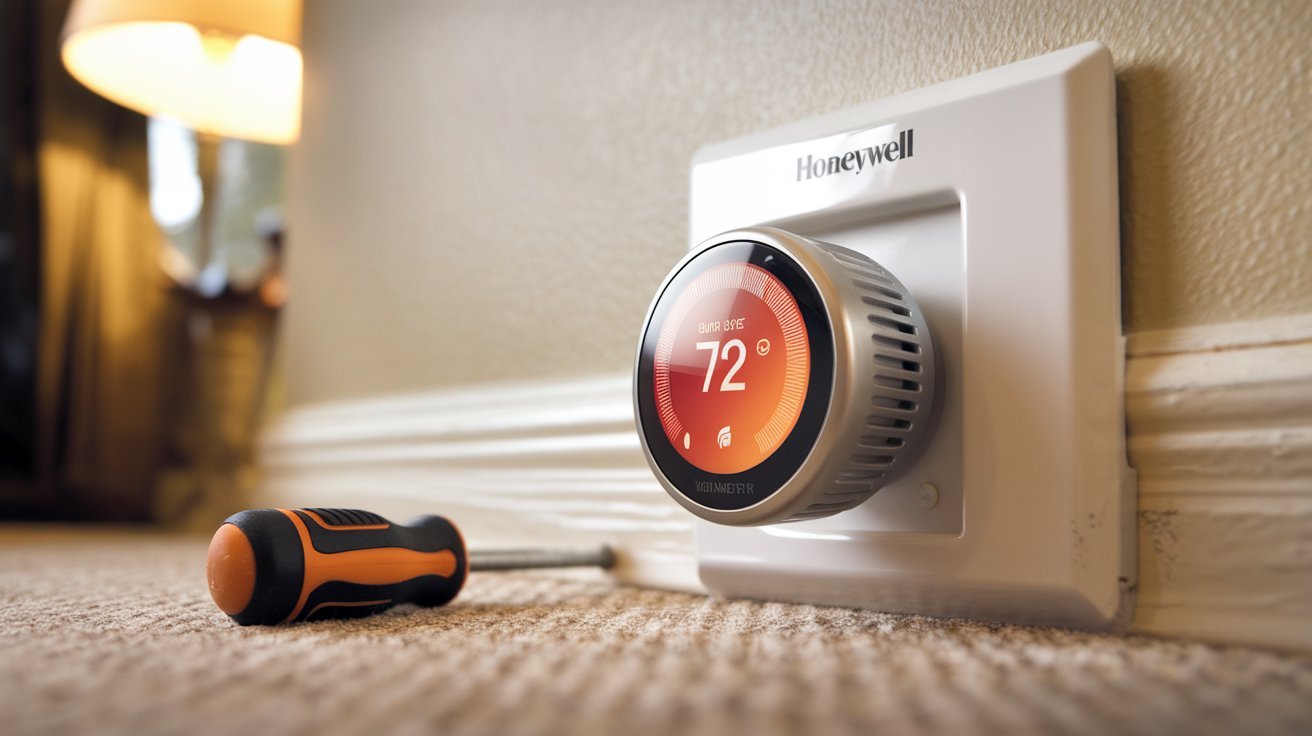
A Honeywell thermostat install can be a practical way to replace an older thermostat, improve temperature control, or add modern features such as programming, Wi-Fi connectivity, and smart-home integration. However, thermostat installation is not simply a matter of matching colored wires and attaching a new device to the wall. The correct procedure depends on the Honeywell Home thermostat model, the type of heating and cooling equipment in the home, and the existing wiring configuration.
Honeywell Home installation instructions emphasize an important point: thermostat wires should be identified by their terminal labels rather than wire color alone. Wire colors are not standardized, so assuming that a red, white, blue, or green wire always performs one particular function can result in an incorrect connection. Before starting a Honeywell thermostat install, homeowners should verify compatibility, shut off HVAC power, photograph the existing wiring, label the wires, and follow the instructions for the exact thermostat model.
What You Need Before a Honeywell Thermostat Install
Preparation makes the installation considerably easier. Before removing the existing thermostat, gather the new Honeywell Home thermostat, a Phillips screwdriver, a small flat-head screwdriver if required, a pencil, and a level. Depending on the wall and thermostat model, you may also need a drill, drill bit, wall anchors, wire labels, or small pliers. Honeywell’s current installation documentation lists several of these tools for its thermostat installations.
The first step is confirming that the thermostat is compatible with your HVAC system. Some models are designed for conventional heating and cooling systems, while others support heat pumps, multi-stage equipment, or particular wiring configurations.
Pay particular attention to the voltage. Standard Honeywell Home thermostats are generally intended for low-voltage HVAC systems. If you find thick wires, wire nuts, or wiring associated with 120/240-volt equipment, stop before continuing. Honeywell’s installation documentation warns that these systems require a different type of thermostat and should not be connected to a standard low-voltage model.
Turn Off Power and Document the Existing Wiring
Safety should come before wiring. Turn off the power to the heating and cooling equipment at the appropriate breaker or service switch. Some HVAC systems may have separate power supplies for different equipment.
After switching off the power, verify that the system does not start when you adjust the old thermostat. Honeywell recommends checking that the system is actually off before continuing.
Next, carefully remove the old thermostat’s faceplate without immediately disconnecting the wires. Take a clear photograph of the existing wiring, making sure the terminal letters are visible. This picture can become your most useful reference during installation.
The terminal label is more important than the wire’s color. Common terminals include R, Rc, Rh, W, Y, G, C, and O/B, but not every thermostat uses all of them. Honeywell specifically advises identifying wires by the terminals to which they are connected.
Label each connected wire before disconnecting it. Keep track of any jumper wires, because a jumper connecting two terminals is different from a separate wire leading into the HVAC system.
Understanding Honeywell Thermostat Wiring
Understanding the basic terminal designations makes a Honeywell thermostat install easier to follow. The exact configuration still depends on the HVAC system and thermostat model.
R generally provides 24-volt power from the heating transformer, while Rc is commonly associated with cooling power when separate heating and cooling circuits are used. W is commonly used for first-stage heating, Y for cooling or compressor control, and G for indoor fan control.
The C terminal, or common wire, provides a continuous power connection for many smart thermostats. Heat-pump systems can use an O/B terminal for the reversing valve. Other terminals may control second-stage heating, auxiliary heat, humidification, dehumidification, ventilation, or other equipment.
Honeywell’s official wiring guidance stresses that there is no universal wire-color standard. For that reason, do not connect wires solely because their colors appear to match a diagram. Follow the terminal labels and the installation instructions for your specific thermostat.
How to Mount the New Honeywell Thermostat
Once the old thermostat has been removed and the wires have been safely labeled, feed the wires through the opening in the new wall plate or mounting base. Position the base against the wall and use a level if necessary.
Mark the mounting holes, install suitable anchors when required, and secure the base with the supplied screws. Avoid overtightening because excessive force can damage or distort the mounting plate. Honeywell’s installation instructions recommend securing the mounting system firmly without overtightening the screws.
Thermostat location also matters. Honeywell recommends installing the thermostat approximately 5 feet (1.5 meters) above the floor in an area with representative room temperature and good air circulation. Avoid locations affected by drafts, direct sunlight, hot appliances, ducts, corners, doors, or unheated exterior areas.
Connecting the Wires to a Honeywell Thermostat
After the mounting plate is secure, connect the labeled wires to the corresponding terminals according to the thermostat’s installation guide.
A common conventional system may use R, W, Y, G, and C, but your system may have fewer or additional connections. A heat pump can have an O/B connection, while multi-stage equipment may require additional terminals.
If you have one R-type wire, the thermostat’s configuration may differ from a system with separate R and Rc wires. Certain Honeywell models use a slider or switch to configure the R connection. Do not assume that every Honeywell thermostat uses the same arrangement.
Smart thermostats may also require a C-wire or an approved power adapter. If your existing thermostat does not have a C-wire, check whether your particular Honeywell model supports a C-wire adapter or another approved installation method. Honeywell provides specific guidance for C-wire adapters and compatibility.
After inserting each wire, make sure it is firmly secured and that exposed conductors are not touching neighboring terminals.
Installing a Honeywell Smart Thermostat and C-Wire
A Honeywell smart thermostat install can involve additional configuration beyond simply connecting wires. Smart models may need continuous power, Wi-Fi setup, app configuration, and HVAC equipment selection.
The C-wire is especially important because many smart thermostats use it for continuous electrical power. If your existing system has a wire connected to C, it may be possible to connect it to the C terminal of the new thermostat, provided the thermostat’s instructions support that configuration.
If there is no C-wire, do not guess which unused wire can substitute for it. Honeywell offers C-wire adapter solutions for certain systems, but compatibility depends on the equipment and thermostat.
After installation, a smart thermostat may guide you through selecting heating and cooling equipment, configuring the fan, connecting to Wi-Fi, and pairing with its mobile application.
Restore Power and Test the System
Once all wiring has been checked, attach the thermostat display or faceplate to the mounted base according to the manufacturer’s instructions. Restore power to the HVAC system.
Allow the thermostat to start and then test the available modes. Depending on the system, check heating, cooling, and fan operation separately. Confirm that the thermostat responds when the temperature setting is adjusted.
If the system behaves unexpectedly, immediately stop troubleshooting by randomly moving wires. Turn off power and consult the installation manual or an HVAC professional.
A thermostat that displays an error, fails to power on, repeatedly resets, or activates the wrong equipment may indicate a wiring, compatibility, configuration, or HVAC-system problem rather than a defective thermostat.
Common Honeywell Thermostat Installation Mistakes
Several mistakes can make an otherwise straightforward installation unnecessarily difficult.
The first is matching wires by color instead of terminal labels. Because wire colors are not standardized, this can create incorrect connections.
Another mistake is failing to photograph the old thermostat before removing wires. A clear picture provides valuable information if the new thermostat uses a different terminal arrangement.
Installing a low-voltage thermostat on a line-voltage system is another serious error. Thick electrical wires, wire nuts, or 120/240-volt equipment should be treated as a warning sign.
Homeowners should also avoid guessing about heat-pump wiring. Heat pumps can use O/B terminals and auxiliary heat connections that differ from conventional furnace-and-air-conditioner systems. Honeywell’s instructions provide separate wiring guidance for heat-pump configurations.
Finally, forcing wires into the wrong terminals, leaving exposed conductors touching each other, or skipping the equipment compatibility check can cause improper HVAC operation.
Frequently Asked Questions About Honeywell Thermostat Install
Can I install a Honeywell thermostat myself?
A homeowner may be able to perform a straightforward low-voltage thermostat replacement when the HVAC system and thermostat are compatible and the wiring is clearly identified. However, complicated systems, unfamiliar wiring, heat pumps, line-voltage systems, or uncertain connections are situations where professional HVAC assistance is appropriate.
Do Honeywell thermostats need a C-wire?
Not every Honeywell thermostat requires the same wiring. Many smart thermostats need continuous power and may require a C-wire or an approved adapter. Check the installation instructions for the exact model.
Can I connect thermostat wires according to their colors?
No. Do not rely on color alone. Honeywell specifically states that there is no standard color scheme for thermostat wiring. Identify wires according to the terminal labels on the existing thermostat and the instructions for the new model.
Where should a thermostat be installed?
Honeywell recommends positioning the thermostat about 5 feet above the floor in an area with good air circulation and an average temperature. Avoid drafts, direct sunlight, ducts, appliances, and other sources of abnormal heating or cooling.
What if my Honeywell thermostat does not turn on?
First verify that HVAC power has been restored. Then check whether the wiring and C-wire configuration match the model’s instructions. If the thermostat remains blank or the wiring does not match the installation guide, stop and seek model-specific support rather than moving wires at random.
Conclusion
A successful Honeywell thermostat install starts with compatibility and safety rather than wiring. Turn off HVAC power, photograph the old thermostat, label every connected wire, identify terminals correctly, and follow the instructions for the exact Honeywell Home model.
The most important rule is to identify wires by terminal designation, not color. Smart thermostats also require special attention to the C-wire, power requirements, Wi-Fi configuration, and HVAC compatibility. When the system involves unfamiliar wiring, high voltage, complex heat-pump equipment, or connections that do not match the manual, professional installation is the safer approach.
With careful preparation and correct wiring, a Honeywell thermostat can provide reliable control over your home’s heating and cooling while making it easier to manage comfort and temperature settings.

2026 Ford Bronco Big Bend: Features, Performance, Interior, and Off-Road Capability

Red Mountain Dew: What It Is, Flavor, History, and Availability

April’s Social Security Payments Won’t Arrive as Usual: 2026 Payment Schedule Explained

Dorothée Lepère: Everything You Need to Know About François-Henri Pinault’s Former Wife

Ana Luz Rodriguez-Paz: Biography, Career, Achievements, and Complete Profile

That-Bites.org: The Complete 2026 Guide to the Food, Lifestyle, and Recipe Platform
 celebrity3 months ago
Dorothée Lepère: Everything You Need to Know About François-Henri Pinault’s Former Wife
- celebrity3 months ago
Ana Luz Rodriguez-Paz: Biography, Career, Achievements, and Complete Profile
- Food2 months ago
That-Bites.org: The Complete 2026 Guide to the Food, Lifestyle, and Recipe Platform
- Blog2 months ago
5 Letter Words Starting with CA: Complete Word List, Meanings, Examples, and Word Game Guide (2026)
- celebrity3 months ago
Timothy shalloway: Biography, Movies, Career, Personal Life, and Hollywood Success
- Blog2 months ago
0800497: What Does This Number Mean and Is It a Scam in 2026?
- Business2 months ago
402-935-7733: Why This Number Appears on Your Bank Statement and What It Means (2026 Guide)
- Tech2 months ago
Ontpresscom About Us: Complete Guide to the Platform, Mission, Features, and Editorial Vision (2026)