
Blog
2025 Mitsubishi Outlander Sport: Complete Guide to Specs, Features, Trims, Performance, and Value

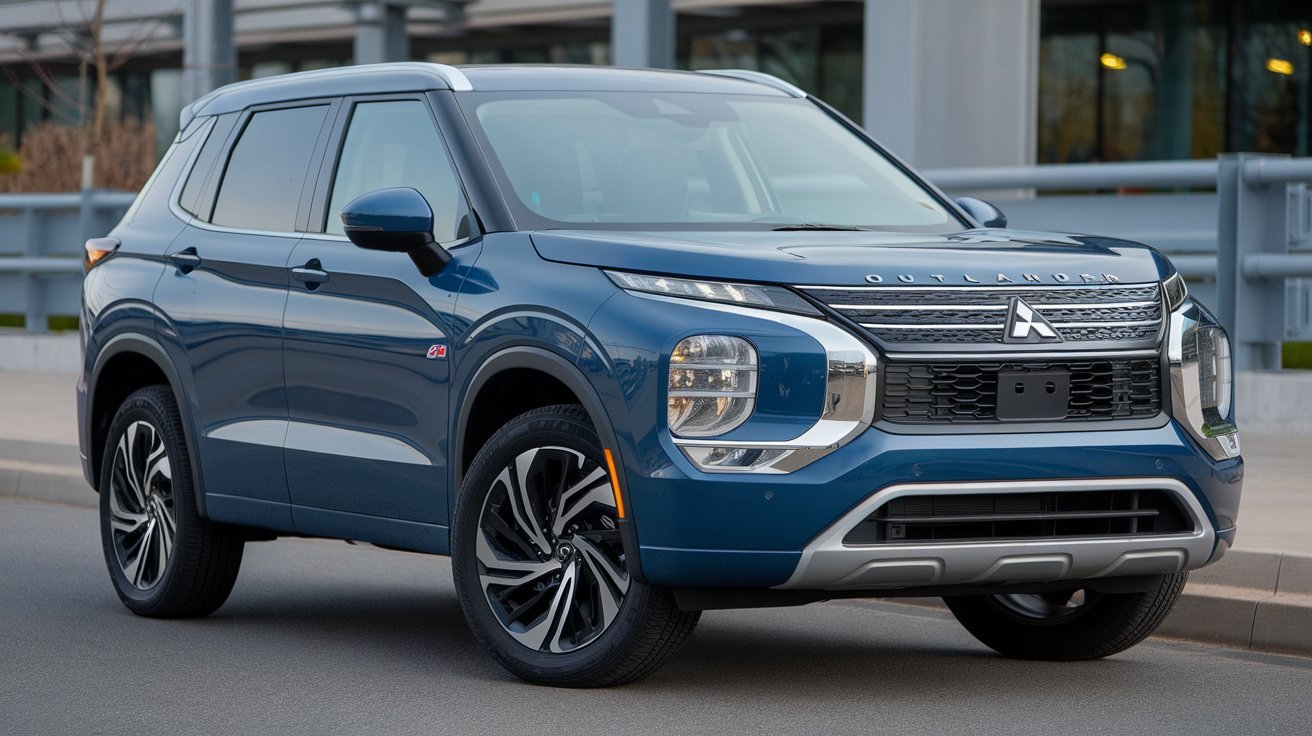
The 2025 Mitsubishi Outlander Sport remains an interesting choice in the compact SUV segment for drivers who want a practical vehicle with standard all-wheel-drive capability, a relatively affordable entry price, and Mitsubishi’s long powertrain warranty. For 2025, the Outlander Sport carries forward an established formula rather than receiving a major redesign. It combines a compact exterior, five-passenger seating, a continuously variable transmission, and a choice of two gasoline engines depending on trim.
While newer competitors may offer more sophisticated cabins or stronger performance, the Outlander Sport stands out through its All-Wheel Control (AWC) availability, straightforward mechanical layout, generous warranty coverage, and broad selection of trims. We can therefore view the 2025 model as a practical small SUV aimed at buyers who prioritize value, everyday usability, and all-weather capability.
2025 Mitsubishi Outlander Sport Engine and Performance
The 2025 Mitsubishi Outlander Sport offers two naturally aspirated four-cylinder engine choices. Most versions use a 2.0-liter MIVEC four-cylinder engine producing 148 horsepower and 145 lb-ft of torque. It is paired with a continuously variable transmission (CVT) and All-Wheel Control.
At the top of the range, the 2.4-liter MIVEC four-cylinder produces approximately 168 horsepower and 167 lb-ft of torque. The larger engine is reserved for the higher-level SEL configuration, making it the preferable choice for drivers who want stronger acceleration.
The 2.0-liter engine is adequate for commuting, urban driving, and normal highway use, but it is not designed to deliver sports-car acceleration. The larger 2.4-liter engine provides noticeably more usable power, although the CVT and relatively conservative character of the SUV mean that the Outlander Sport remains primarily a comfortable, practical crossover rather than a performance SUV.
The suspension uses front MacPherson struts and a rear multi-link design, while four-wheel disc brakes provide stopping power. The combination gives the Outlander Sport predictable handling for everyday driving.
2025 Mitsubishi Outlander Sport Fuel Economy and Dimensions
Fuel economy depends on the engine and drivetrain configuration. The 2.0-liter Outlander Sport S with AWC is rated at approximately 23 mpg city and 29 mpg highway, with 26 mpg combined. Its fuel tank holds 16.6 gallons.
The vehicle has a 105.1-inch wheelbase, measures approximately 171.9 inches long, and is about 71.3 inches wide without mirrors. Ground clearance is approximately 8.5 inches, giving the compact SUV useful clearance for uneven roads, driveways, gravel surfaces, and light outdoor travel.
Inside, the 2025 Outlander Sport accommodates five passengers. The available cargo capacity is approximately 21.7 cubic feet behind the second row and up to 49.5 cubic feet behind the front seats with the rear seats folded.
This configuration makes the Outlander Sport useful for groceries, luggage, sports equipment, and everyday household cargo. Its compact exterior dimensions also make it easier to maneuver and park than a larger three-row SUV.
2025 Mitsubishi Outlander Sport Trims and Features
The 2025 Outlander Sport is offered in several configurations, including S, ES, LE, SE, Trail Edition, and SEL. The official Mitsubishi lineup lists the 2.0 S from $24,445, while higher trims add comfort, appearance, technology, and safety equipment.
The S trim provides the basic value proposition, including AWC, automatic climate control, rain-sensing front wipers, and LED headlights. Moving to the ES adds features such as automatic high beams, Forward Collision Mitigation with pedestrian detection, LED fog lights, and Lane Departure Warning.
The LE focuses more heavily on styling, featuring 18-inch black-painted alloy wheels, black exterior accents, and red stitching throughout selected interior components.
The SE adds desirable convenience and safety equipment, including Blind Spot Warning, Lane Change Assist, Rear Cross Traffic Alert, push-button start, power-folding mirrors, and two-tone 18-inch alloy wheels.
The Trail Edition is aimed at buyers who want a more rugged appearance. It adds black wheels, mud flaps, protective exterior elements, special badging, and Trail Package front, rear, and side protectors.
At the top sits the 2.4 SEL, which combines the larger engine with features such as leather-appointed seating and a power-adjustable driver’s seat.
Interior, Technology, and Comfort
Inside the 2025 Mitsubishi Outlander Sport, the focus is on functionality rather than luxury. Five people can travel in the cabin, while the 60/40 split-folding rear seats provide additional flexibility when transporting larger objects. Mitsubishi includes features such as Bluetooth connectivity, a 7-inch display audio system, USB connectivity, cruise control, steering-wheel audio controls, and automatic climate control depending on configuration.
Higher trims introduce more attractive upholstery, leather-wrapped controls, additional speakers, and convenience equipment. The SE, for example, includes a six-speaker audio system, while the SEL provides leather-appointed seating.
The cabin’s compact dimensions make it particularly appropriate for couples, small families, commuters, and drivers who prefer an SUV without moving into a larger vehicle category. Rear passenger space is usable, although shoppers who frequently carry tall adults should compare the Outlander Sport directly with roomier competitors.
Safety and All-Wheel Control
Safety is one of the stronger aspects of the 2025 Outlander Sport’s equipment strategy. Depending on trim, the SUV can include Forward Collision Mitigation with Pedestrian Detection, Lane Departure Warning, Blind Spot Warning, Lane Change Assist, Rear Cross Traffic Alert, Automatic High Beam, and multiple airbags.
The vehicle also uses Mitsubishi’s All-Wheel Control (AWC) system. AWC manages driving and braking forces across the four wheels to help maintain vehicle behavior in changing road conditions. Mitsubishi emphasizes that AWC is a driver-assistance system and does not replace careful driving.
For drivers who regularly encounter rain, snow, gravel, or slippery roads, standard AWC availability is an important advantage. It gives the Outlander Sport a useful capability that is not always standard throughout the small-SUV segment.
2025 Mitsubishi Outlander Sport Price and Warranty
Pricing varies considerably by trim. Mitsubishi lists the 2025 Outlander Sport 2.0 S from $24,445, with prices increasing as buyers move through the ES, LE, SE, Trail Edition, and SEL models.
One of the vehicle’s most attractive ownership advantages is Mitsubishi’s 10-year/100,000-mile powertrain limited warranty for qualifying original owners. The manufacturer’s brochure highlights the 100,000-mile powertrain coverage, while the standard limited warranty is listed at five years or 60,000 miles.
This warranty can provide substantial peace of mind for buyers planning to keep their vehicle for many years. Warranty terms and eligibility can vary, particularly for subsequent owners, so we should confirm the exact coverage with Mitsubishi or an authorized dealer before purchasing.
Is the 2025 Mitsubishi Outlander Sport Worth Buying?
The 2025 Mitsubishi Outlander Sport makes the most sense for buyers who want a relatively affordable compact SUV with AWC capability, five-passenger seating, useful cargo flexibility, straightforward gasoline powertrains, and a long powertrain warranty.
Its limitations are equally important to recognize. The base 2.0-liter engine is not particularly powerful, the CVT can feel less refined than some competing transmissions, and the interior does not deliver the premium appearance found in several newer rivals. Independent testing has also noted that the Outlander Sport’s performance and fuel economy trail some more modern competitors.
Nevertheless, the combination of price, standard all-wheel-drive availability, compact dimensions, practical cargo space, and warranty coverage gives the 2025 Outlander Sport a clear place in the market. For buyers who value dependable everyday transportation over cutting-edge technology or sporty performance, it remains a vehicle worth considering.
Frequently Asked Questions
How many people does the 2025 Mitsubishi Outlander Sport seat?
The 2025 Outlander Sport seats five passengers.
Does the 2025 Mitsubishi Outlander Sport have AWD?
Yes. Mitsubishi calls its system All-Wheel Control (AWC), and it is available across the 2025 lineup, with the official trim specifications showing AWC on the listed configurations.
How much horsepower does the 2025 Outlander Sport have?
The standard 2.0-liter engine produces 148 horsepower, while the available 2.4-liter engine produces 168 horsepower.
Is the 2025 Outlander Sport good on gas?
The 2.0-liter AWC model is rated at approximately 26 mpg combined, 23 mpg city, and 29 mpg highway.
Does the Outlander Sport have a good warranty?
Yes. Mitsubishi offers a 10-year/100,000-mile powertrain limited warranty for qualifying original owners, along with a five-year/60,000-mile new-vehicle limited warranty.
Conclusion
The 2025 Mitsubishi Outlander Sport continues to target buyers who want a compact SUV with a straightforward design, practical dimensions, available or standard All-Wheel Control, multiple trim levels, and one of the industry’s more generous powertrain warranties. Its 2.0-liter and 2.4-liter engine choices, five-passenger cabin, flexible cargo area, and extensive available safety technology make it a practical option for everyday transportation.
While it may not be the newest or most powerful vehicle in its class, the Outlander Sport’s combination of value, capability, manageable size, and long-term warranty protection keeps it relevant for 2025 buyers. For shoppers prioritizing practical ownership and all-weather versatility over premium interior appointments and outright performance, it deserves a place on the compact-SUV shortlist.

Have you ever wondered, “How many people have my name?” Whether you have a very common name such as Michael or James or a less familiar first and last name, it can be surprisingly interesting to discover how many other people share it.
Your first name may belong to millions of people, while combining it with your surname can make the full name much less common. In 2026, online name-frequency tools make it easier to explore name popularity, rarity, historical trends, and estimated numbers of people with the same name.
However, it is important to understand that most online results are statistical estimates, not a live worldwide census of every person who currently has your name.
How Many People Have My Name?
The simplest way to answer the question is to use a name frequency calculator. These tools allow you to enter your first name, last name, or both and receive an estimated number of people who share it.
For U.S. searches, many calculators use data from the Social Security Administration (SSA) for first names and U.S. Census Bureau data for surnames. Some newer services combine historical birth records with survival estimates to approximate how many people carrying a particular name may still be alive today.
For example, a first name such as James can be shared by millions of Americans, while an uncommon first name may be shared by only a small number. When a surname is added, the estimated population can become dramatically smaller.
The important distinction is between historical name frequency and estimated living name frequency. A database containing births from many decades can tell us how often a name was registered, but it does not automatically mean every person recorded is still living.
How Do Name-Frequency Calculators Work?
A modern “How Many of Me” calculator generally combines several types of demographic information.
For first names in the United States, the SSA publishes baby-name statistics based on Social Security card applications. Public datasets extend back to the late 19th century, allowing researchers to examine how names changed over generations. Some online calculators then apply age-specific survival estimates to historical birth cohorts.
Surname information can come from U.S. Census Bureau frequency tables. A calculator can use the frequency of a particular surname together with the estimated frequency of a first name to calculate an approximate number of people sharing the complete name.
One commonly used statistical approach can be represented as:
Estimated full-name population = first-name frequency × surname frequency × population
This is a mathematical estimate rather than an actual list of people. Because first names and surnames are not perfectly independent, the result can differ from the real number.
Is My Name Common or Rare?
Finding the number of people who share your name is only part of the story. You may also want to know whether your name is common, uncommon, rare, or very rare.
A name that appears hundreds of thousands of times is clearly widespread, while a name with only a few hundred estimated living bearers is considerably less common. Some online calculators provide a “1 in X people” measurement or a rarity classification to make the number easier to understand.
Your personal experience can sometimes be misleading. If you attended school with several people who had your first name, it may feel extremely common. Someone living in a different region may have encountered the same name only once or twice.
Geography, age, culture, immigration patterns, and naming traditions can all affect how common a name feels in a particular community.
What About My Full Name?
Searching for your full name is usually more interesting than searching for only your first name.
Millions of people may share a common first name, but the combination of first name and surname is naturally more specific. For example, Michael is a very common first name, and Smith is a very common surname. Their combination can therefore still belong to many people.
By contrast, combining an uncommon first name with an uncommon surname can produce a much smaller estimate.
Some name tools calculate full-name frequency by combining first-name and surname probabilities. One current U.S. calculator explains that this approach assumes statistical independence between first and last names, meaning the actual number can differ when cultural or demographic patterns make certain combinations more or less likely.
This is why a result such as “there may be 500 people with your name” should be interpreted as an estimate rather than an exact population count.
Can I Find Out How Many People Have My Name Worldwide?
The answer becomes more complicated when you move beyond the United States.
There is no single worldwide database containing every person’s first and last name. Different countries collect and publish different types of population, birth, census, and surname information.
Some newer name-statistics platforms combine official or publicly available records from several countries, including the United States, United Kingdom, Canada, Australia, and New Zealand. These databases can provide broader international estimates, but coverage and methodology vary from country to country.
A worldwide number should therefore be treated carefully. A result from one website may differ substantially from another because the services use different countries, years, datasets, population estimates, and statistical assumptions.
If you want the most reliable answer, check which countries and years are included before interpreting the number.
How to Check How Many People Share Your Name
Finding your name frequency is usually straightforward.
Step 1: Enter your first name.
Start with your given name if you want to see its overall popularity and historical frequency.
Step 2: Enter your surname.
A surname search can show how frequently your family name appears in available census or demographic data.
Step 3: Search the complete name.
If the website supports it, enter your first and last name together to receive a full-name estimate.
Step 4: Examine the historical information.
Look at popularity by year or decade. A name may have been extremely popular among earlier generations but relatively uncommon among children today.
Step 5: Check geographic information.
Some tools provide state or country distributions, which can show where a name has historically been more prevalent.
Remember that a name search should answer how common the name is, not identify individual people who have it.
Why Different Websites Give Different Numbers
If you search your name on several websites, you may notice that the results do not match. This is normal.
Different services may use different data sources, population baselines, historical periods, survival models, and calculation methods. One website might count historical births, while another estimates the number of living people. Another may focus only on a particular country’s records.
Privacy rules also affect the data. For example, the SSA suppresses certain very small yearly name counts in its public baby-name data, meaning extremely rare names may not appear even when people genuinely have them.
For that reason, the best way to interpret a name-frequency result is to treat it as a demographic estimate with a methodology, rather than as an exact headcount.
Final Thoughts: How Many People Have Your Name?
The question “How many people have my name?” is more than simple curiosity. Name-frequency statistics can reveal how common your first name and surname are, how naming trends have changed over time, and how unusual your complete name combination may be.
In 2026, online tools can estimate name frequency using decades of SSA birth records, Census surname data, demographic information, and survival models.
The most important thing to remember is that these numbers are generally estimates, not exact live counts. Your result can vary depending on the country, dataset, time period, and methodology used.
So, if you have ever wondered whether there are 10, 100, 10,000, or millions of people with your name, entering your name into a reputable frequency calculator can provide an interesting statistical answer—and may reveal that your name is either much more common or much rarer than you expected.

Many Americans searching for “April’s Social Security payments won’t arrive as usual” are trying to understand why their benefit may appear on a different date than expected. Social Security payments do not arrive on one universal day each month. The Social Security Administration (SSA) uses different payment schedules depending on the type of benefit, when a person began receiving benefits, and the beneficiary’s date of birth.
For April 2026, the official SSA calendar shows several payment dates throughout the month. Supplemental Security Income (SSI) is scheduled for April 1. Some Social Security beneficiaries receive their payment on April 3, while most beneficiaries paid according to the Wednesday schedule receive payments on April 8, April 15, or April 22.
Understanding these rules is important because a payment arriving on a different day does not necessarily mean that benefits have been reduced, canceled, or delayed. In many cases, the date is simply determined by the standard SSA payment cycle.
Why April Social Security Payments Can Arrive on Different Dates
The SSA does not send every Social Security benefit on the same day. The payment date depends primarily on the type of benefit and the beneficiary’s circumstances.
People who started receiving Social Security before May 1, 1997, generally follow a different schedule from people who began receiving benefits later. The SSA explains that certain beneficiaries receive payments on the third day of the month, while beneficiaries covered by the newer schedule generally receive payments on a Wednesday based on their birth date.
For beneficiaries whose payment date is determined by their birthday, the schedule works as follows:
- Birthdays from the 1st through the 10th generally receive payment on the second Wednesday.
- Birthdays from the 11th through the 20th generally receive payment on the third Wednesday.
- Birthdays from the 21st through the 31st generally receive payment on the fourth Wednesday.
This means two people living in the same household could potentially receive Social Security on different days.
April 2026 Social Security Payment Dates
The official 2026 Social Security payment calendar provides the dates beneficiaries can use to plan their April income.
For April 2026, the important dates include:
| Benefit or payment group | April 2026 payment date |
|---|---|
| SSI | April 1 |
| Certain Social Security beneficiaries paid on the 3rd | April 3 |
| Birth dates 1st–10th | April 8 |
| Birth dates 11th–20th | April 15 |
| Birth dates 21st–31st | April 22 |
The exact situation can be more complicated for people who receive both SSI and Social Security, because those benefits can follow different payment rules. The SSA recommends using its official benefit-payment schedule to determine an individual’s upcoming payment dates.
Therefore, someone expecting a payment near the beginning of April should not automatically assume that everyone else receiving Social Security will receive money on the same day.
Why Some Beneficiaries Receive Social Security on April 3
The April 3 payment date can be particularly important for beneficiaries who are covered by the older payment schedule or certain special circumstances.
According to the SSA, beneficiaries who were receiving or had applied for Social Security benefits by April 30, 1997, generally receive benefits on the third day of the month. The SSA also lists several circumstances in which beneficiaries continue to receive payment on the third, including certain people who receive both Social Security and SSI.
April 3, 2026, falls on a Friday, so the normal weekday payment rule does not require the payment to be moved earlier.
This is an important distinction because Social Security dates can sometimes move when a scheduled payment falls on a Saturday, Sunday, or legal public holiday. SSA policy says that when a scheduled payment falls on one of those days, benefits are generally paid on the preceding business day.
How SSI Payments Differ From Social Security
Another reason April’s payment schedule can seem unusual is the difference between SSI and Social Security retirement or disability benefits.
SSI is a needs-based federal program with its own payment schedule. SSI payments are generally scheduled for the first day of the month. If that date falls on a weekend or qualifying holiday, the payment can be issued on the preceding business day.
For April 2026, April 1 is a Wednesday, so the official calendar places the April SSI payment on that date.
People who receive both SSI and Social Security should therefore pay attention to both schedules. Seeing one deposit arrive at the beginning of the month does not necessarily mean that another Social Security payment is missing.
What to Do If Your April Payment Has Not Arrived
If your expected payment date has passed and the money has not appeared, first verify the official payment date for your specific benefit. The SSA provides an online tool where beneficiaries can view upcoming and past payment dates.
Next, check the financial institution or payment method associated with your benefits. Banks and other financial institutions can have their own processing times, so the date a payment becomes visible in an account can sometimes differ from the date established by SSA.
If the payment still has not arrived after checking these possibilities, contact the Social Security Administration. SSA’s published payment information provides its automated phone assistance number, 1-800-772-1213, and TTY assistance at 1-800-325-0778.
Avoid relying on social-media posts or unofficial payment calendars when a benefit appears late. The official SSA schedule should be the primary reference.
Does a Different April Payment Date Mean Benefits Are Changing?
A different payment date does not automatically mean that the amount of a person’s benefits has changed. Payment timing and benefit amounts are separate issues.
The SSA’s schedule is designed to distribute payments according to established rules. For most beneficiaries on the Wednesday schedule, the payment date is tied to the day of birth of the person whose earnings record determines the benefit.
Consequently, a beneficiary who normally receives money around the middle of a month should not expect the payment to arrive on exactly the same numerical day every month.
The best way to avoid confusion is to check the annual SSA payment calendar and identify the applicable payment category before assuming that a payment is late.
Frequently Asked Questions About April’s Social Security Payments
Will Social Security payments be delayed in April 2026?
Not generally. April 2026 has multiple scheduled payment dates, and receiving a payment later in the month can be normal depending on the beneficiary’s payment category and birth date.
When is SSI paid in April 2026?
The official SSA calendar lists April 1, 2026, as the April SSI payment date.
When will Social Security be paid in April 2026?
Depending on the beneficiary’s circumstances, scheduled April dates include April 3, April 8, April 15, and April 22.
Why do Social Security recipients have different payment dates?
The SSA uses different schedules based on factors including when benefits began, the type of benefit, and the beneficiary’s date of birth.
What happens if a Social Security payment date falls on a weekend?
If a scheduled payment date falls on a Saturday, Sunday, or legal public holiday, SSA generally issues the payment on the preceding business day.
Where can I check my personal payment date?
The SSA provides an online benefit payment schedule where beneficiaries can check upcoming and previous payment dates.
Conclusion
The headline “April’s Social Security payments won’t arrive as usual” can sound alarming, but the April 2026 schedule is largely explained by the SSA’s established payment system. Social Security benefits are distributed on different dates rather than arriving on one universal day.
For April 2026, SSI is scheduled for April 1, while certain Social Security beneficiaries are scheduled for April 3. Beneficiaries on the Wednesday birthday-based schedule are scheduled for April 8, April 15, or April 22, depending on their date of birth.
The key is to identify which payment schedule applies to you. If your payment does not arrive on its official scheduled date, check your SSA payment information and financial institution before assuming there is a broader problem. The official Social Security Administration calendar remains the most reliable source for determining when April benefits are scheduled.

Enntal: Meaning, Uses, Context, and What to Know in 2026

TriDeltathon: History, Race Format, Charity, and What It Means Today

How Many People Have My Name? Find Out How Common Your Name Is in 2026

Dorothée Lepère: Everything You Need to Know About François-Henri Pinault’s Former Wife

Ana Luz Rodriguez-Paz: Biography, Career, Achievements, and Complete Profile

That-Bites.org: The Complete 2026 Guide to the Food, Lifestyle, and Recipe Platform
 celebrity3 months ago
Dorothée Lepère: Everything You Need to Know About François-Henri Pinault’s Former Wife
- celebrity3 months ago
Ana Luz Rodriguez-Paz: Biography, Career, Achievements, and Complete Profile
- Food2 months ago
That-Bites.org: The Complete 2026 Guide to the Food, Lifestyle, and Recipe Platform
- Blog2 months ago
5 Letter Words Starting with CA: Complete Word List, Meanings, Examples, and Word Game Guide (2026)
- celebrity3 months ago
Timothy shalloway: Biography, Movies, Career, Personal Life, and Hollywood Success
- Blog2 months ago
0800497: What Does This Number Mean and Is It a Scam in 2026?
- Business2 months ago
402-935-7733: Why This Number Appears on Your Bank Statement and What It Means (2026 Guide)
- Tech2 months ago
Ontpresscom About Us: Complete Guide to the Platform, Mission, Features, and Editorial Vision (2026)